








Professor Dong-Hyun Ahn of SNU “Korea Faces Compound Crisis, Urgently Demands Joint Fiscal-Monetary Prescription”
[Sub-Title]
17th Edaily Strategy Forum to Be Held on June 16~17
Geopolitical Risks and Prolonged High Interest Rates Push Korean Economy into Compound Crisis
“Restoring Corporate Financing Channels Must Take Priority Over Stimulating Distribution Markets”
“Must Break Away from Manufacturing Legacy and Transit to Knowledge-Based Economy”
[Edaily Hee-na Oh, Edaily] “Korea‘s economic survival requires bold decisions to abandon outdated formulas for success equations and overhaul the entire system, from capital-raising structures to industrial DNA.”
|
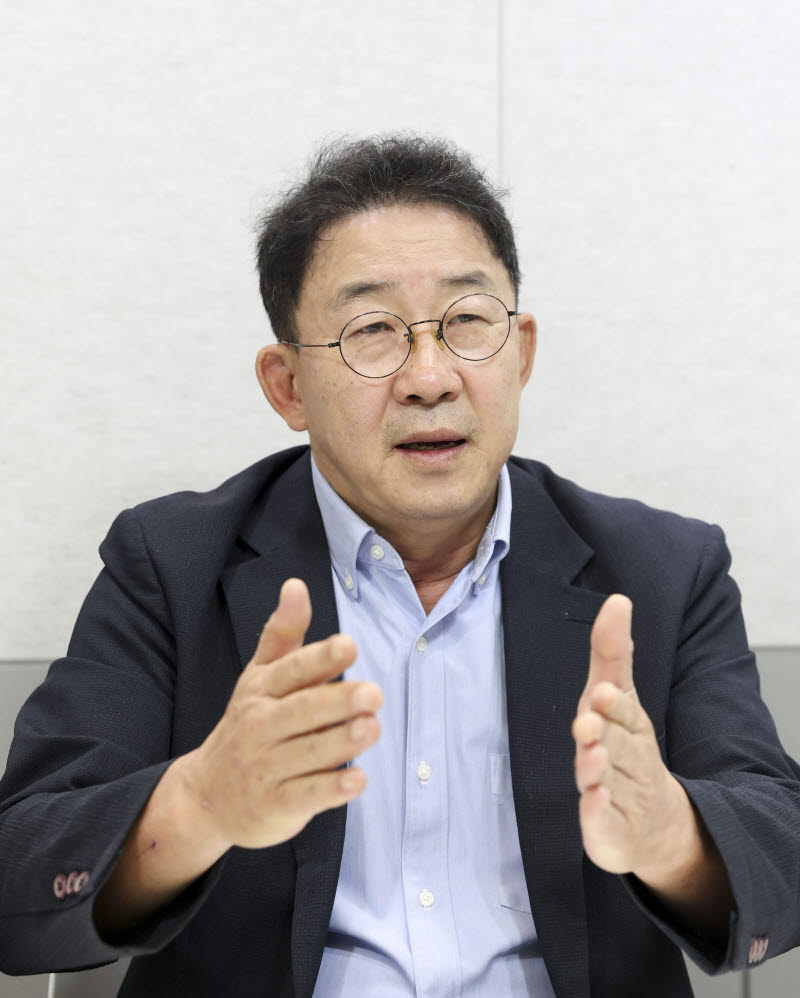
Professor Dong-hyun Ahn Department of Economics at Seoul National University, former President of the Korea Capital Market Institute(KCMI) and one of Korea’s leading scholars in capital markets, diagnosed the current global economy as entering a ‘Classic Stagflation Phase’, ahead of the 17th EDaily Strategy Forum. Ahn stressed, “”Because this crisis is triggered by a ‘Supply-side Shock’ rather than Demand-side, the policy prescriptions are exceptionally difficult.“”
He explained that monetary policy has become increasingly powerless by the structural contradiction of surging inflation and weakening growth.
“”The fundamental issue is that monetary policy alone cannot provide an adequate solution,“” Professor Ahn explained. “”We are trapped in a severe ‘Policy Trade-off.’ “If interest rates are lowered to stimulate the economy, inflation accelerates. If rates are raised to contain inflation, the economic slowdown deepens.”“ He added that this dilemma largely explains why the Bank of Korea has kept interest rates frozen for several consecutive months.
Ahn believes that the energy infrastructure damage caused by the Iran conflict bears striking similarities to devastating 1970s oil shocks. He analyzes that, unlike the past, the today‘s inflation is driven not by excessive demand but is being fueled by energy and geopolitical risks.
”If the conflict persists, inflation will rise first, followed by reduced consumption and economic downturn, resulting a classic stagflationary trajectoy,“ he warned. ”“As energy and commodity prices surge, major economies will have no choice but to raise interest rates, making a recession almost inevitable. If supply infrastructure, especially LNG, crude oil, and fertilizer production facilities hubs, is attacked, recovery could take years, meaning the impact may extend far beyond a temporary shock.” He paticularly noted that Europe, which has heavily relied on the Middle East to substitute its energy imports, could bear the brunt of the damage. The recent volatility in German and Italian bond yields indicates that financial markets are already pricing in the possibility of recession.“
”As Central banks ultimately prioritize price stability, they will have no choice but to raise interest rates,“ Professor Ahn said. ”“The only viable solution may be the combination seen in the early 1980s under Paul Volcker, monetary policy focuses on controlling inflation while fiscal policy supports economic growth.”
Regarding the rapidly depreciating Korean Won, he declared that the era of the 1,200-Won-per-Dollar exchange rate is permanently over, urging Korea to prepare for a new macroeconomic normal.
“”While the demand for dollars is increasing due to foreign capital outflows and rising investments by Korean retail investors in U.S. equities, the buffer provided by foreign exchange reserves continues to shrink, making aggressive defense of the currency far more difficult than in the past,“ Ahn said. ”The 1,200-won era has ended and we must accept exchange rates between 1,300 and 1,500 won per dollar as our new normal.“” He also recommended fundamental reforms to grant the Bank of Korea appropriate institutional authority for financial supervision consistent with its responsibilities for price and financial stability. “”Forcing the central bank to carry the burden of financial stability without granting practical supervisory tools remains a critical problematic structural flaw,“ he said.
Professor Ahn stressed that Korean economy has reached a point where to make painful decisions to abandon outdated success models, and fundamentally restructure both capital-raising channels and industrial foundations, in order to survive.
In the era of intensifying U.S.-China conflict and ”America First“ policies symbolized by the ”Donroe Doctrine,“ China is no longer a partner but a competitor, he noted. The previous ”Security with the U.S., Economy with China“ strategy is no longer viable.
”As countries retreat into their own blocs and raise tariff barriers, inflation is becoming a permanent, structural fixture,“” he warned. “Maintaining a neutral diplomatic stance between the U.S. and China will grow increasingly difficult, and Korea will not be able to avoid pressure to choose sides.”
He continued, “While acknowledging that Korea cannot immediately reduce its dependence on China, China has already become our competitor in the long run,” he said. “We must move beyond an economy that overly dependent on a single sector like semiconductors. It is time to stake our future on a major transition for beyond sovereign AI, toward Physical AI and robotics, areas where our strengths in hardware manufacturing provide a unique competitive advantage.”
To achieve this, he emphasized the need to open pathways for ’Productive Financing‘ so corporations can raise funds at the right time to invest in future industries. Despite the KOSPI index visually breaking the historic 8,000-point mark, he warned that many firms still face significant obstacles in raising capital.
“The essence of Productive Financing is reducing the cost of capital so corporations can invest in new businesses frontiers. This cannot be solved simply by boosting stock prices in the secondary market,” Ahn pointed out excessive regulatory rigidity as a major obstacle on corporate growth.
“Unfair practices such as duplicate listings must be prevented, but excessively restricting channels for duplicate listings or rights offerings may cause companies to lose growth momentum,” he noted. “Emerging industries like Physical AI, robotics, and data centers require massive amounts of capital. If financing routes are blocked at the source, companies will be forced to rely entirely on debt financing, which will ultimately create greater financial risks. What Korea needs is a transparent guidelines that supports healthy capital expansion.”
Professor Dong-hyun Ahn is one of Korea’s leading authority on capital markets, having served as President of the Korea Capital Market Institute (KCMI), a member of the Financial Development Review Committee, and a member of the Presidential National Economic Advisory Council. He is scheduled to present his insights on Korea‘s Survival Strategy amid intensifying global power competition at the 17th Edaily Strategy Forum on June 16-17.
About Professor Dong-Hyun Ahn
△B.A. and M.B.A. in Business Administration, Korea University △Ph.D. in Business Administration, New York University (NYU) △Former Associate Professor, Kenan-Flagler Business School, University of North Carolina at Chapel Hill △Former President, Korea Capital Market Institute (KCMI) △Former Member, Financial Development Review Committee △Former Member, Presidential National Economic Advisory Council △(Current) Professor, Department of Economics, Seoul National University


!["충전없이 24일 쓴다고?" 10만원대 가성비 워치[잇:써봐]](https://image.edaily.co.kr/images/vision/files/NP/S/2026/08/PS26082200398t.jpg)

![“계란 넣고 버튼만 꾹”…품절대란 5000원 계란찜기 써보니[득템기]](https://image.edaily.co.kr/images/vision/files/NP/S/2026/08/PS26082200306t.jpg)